Research brief
Takeaway: Cross-device interaction (bringing whatever devices are at hand into a call) can expand what people do in remote and hybrid meetings, because many sharing needs cannot be planned. But it needs 'seamful' connections that everyone, including remote participants, can see.
Why this matters
- What was known
- Despite decades of research on ad hoc sharing of resources in video-mediated communication, mainstream video-calling systems still tie one user to one device per call, so combining devices is cumbersome.
the dominant free and commercial systems on the market are still largely funneled and siloed
(§Introduction, pp. 1–2) - What this paper adds
- We argue for seamfulness in multi-device video calls, against the 'it just works' ideal of invisible connection. Connections should be accountable and intelligible to everyone. A small study of screen mirroring illustrates the argument.
accountability and intelligibility are the paramount drivers of designing for ad hoc adaptability
(§Designing for ad hoc adaptability, p. 3) - Who it matters to
- Designers and builders of cross-device video-calling systems, as web and device-connection standards open the way beyond host-centric architectures.
The design of such complex systems will need to need to foreground accountability and intelligibility to balance simplicity with seamfulness.
(§Conclusions, p. 4)
Research question
- How can video-calling support ad hoc adaptability across devices? What makes even simple device combinations difficult, which design issues matter, and what does a study of ad hoc screen mirroring suggest?
Method and data
- Design
- Position paper drawing on prior research and a small-scale study of ad hoc screen mirroring in video calls (reported in a separate paper).
- Prototype
- A screen-mirroring add-on for video calls on a shared display. Alongside the call, a secondary window shows a QR code. Any participant, in the room or remote, can point their phone at the code to mirror the phone's screen to the shared display, showing either material on the phone or its live camera. Only one device mirrors at a time. Previously, mirroring was usually restricted to the person driving the host computer.
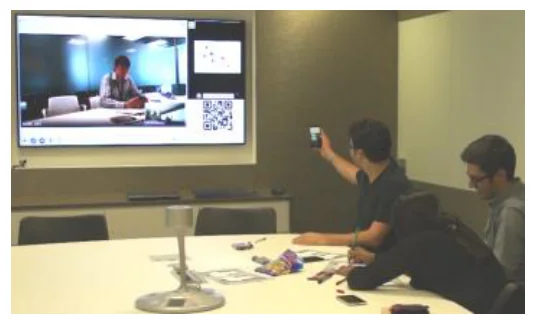
Figure 4: Pointing a smartphone at the QR code provided a seamful way for participants to understand that one participant would soon be mirroring. From the paper, Figure 4, p. 3. - Setting
- Video calls with a shared display, with some participants in the room and some remote.
- Analysis
- The study's analysis is not described here. Its observations are reported briefly and interpreted through accountability and intelligibility.
Findings
Contributing from anywhere. When anyone in a video call could mirror their phone to the shared display, people contributed from wherever they sat, rather than crowding around the host computer. They could even move around the room and beyond it. #
(§Designing for ad hoc adaptability, p. 3)Preparing in parallel. While the group talked around the shared display, individuals got material ready on their own phones without holding up the discussion. #
“This enabled a more fluid interleaving of individual, subgroup, and full group sharing activities.”
Taking turns to share. Because only one phone could mirror at a time, participants sometimes negotiated who would share next, either on the spot or by agreeing an order in advance. #
“bidding for a place such as 'you go first and then I'll go'”
Visible cues helped the room, not remote people. Pointing a phone at the QR code was a visible act that told others someone was about to share. This worked for people in the room, but a remote participant's move to share could go unnoticed unless someone local happened to be watching the screen. #
“Seamfulness, then, must be carefully designed take advantage of local conditions while also recognizing the asymmetry of remote access.”
Questions this paper answers
- Why is it so awkward to combine several devices in one video call?
- Because most video-calling systems assume one username per device per call. A group in a room therefore clusters around one computer and shares one display at a time. Even one person's own devices cannot easily work together, so combining them often costs more effort than it is worth. (See §Designing for ad hoc adaptability, p. 3.)
- What changes when anyone in a meeting can share to the main screen from their own phone?
- When everyone on a call, in the room or remote, could mirror a phone to the shared display, sharing grew more fluid across individuals, subgroups and the whole group. People contributed from where they were, prepared material in parallel, and negotiated turns. This worked best for people in the room. (See §Designing for ad hoc adaptability, p. 3; §Designing for ad hoc adaptability, p. 3; §Designing for ad hoc adaptability, p. 3; §Designing for ad hoc adaptability, p. 3.)
- Should connecting devices in a meeting be seamless and invisible?
- Not entirely. We argue for visible 'seamfulness' (connecting should be easy, but visible, so nobody is surprised). When people connected a phone to a shared screen, the visible act told others in the room that someone was about to share. Remote participants' attempts were easier to miss. (See §Designing for ad hoc adaptability, p. 3.)
Contributions and implications
- Designs for ad hoc multi-device calling should give users both simple and detailed depictions of current connections and policies.
- Seamfulness must be designed to use local conditions while recognising the asymmetry of remote access.
Seamfulness, then, must be carefully designed take advantage of local conditions while also recognizing the asymmetry of remote access.
(§Designing for ad hoc adaptability, p. 3) - Web applications, web media stream standards and IoT connection standards hold promise for ending host-centric architectures.
Limitations
- The screen-mirroring study was small-scale and is only briefly reported here.
We have explored some of these issues in a small-scale study of screen mirroring
(§Designing for ad hoc adaptability, p. 3)
›Concepts
- Ad hoc adaptability
- What a video call should be able to take in as a task unfolds:
Many tasks are achieved through a combination of prepared resources which are brought to bear as situationally appropriate, discovering the need for unexpected resources, and developing resources within the task itself.
(§Introduction, pp. 1–2) - Accountability
- In the ethnomethodological sense, social order achieved in the moment by making reasoning observable and reportable. For systems:
System accountability should operate in the same way, manifested through intelligibility, which is an ongoing awareness of the state of the system.
(§Designing for ad hoc adaptability, p. 3) - Seamfulness
- Against the 'it just works' trend toward invisible connection, we argue for visible seams:
there is value, too, in visible 'seamfulness', such that users are not confused or surprised by any given connection
(§Designing for ad hoc adaptability, p. 3) - 'One username per device per call' model
- The root of the limits on combining devices in a call:
These limitations are the result of the 'one username per device per call' model that pervades most videocalling architectures.
(§Introduction, pp. 1–2)
Figures
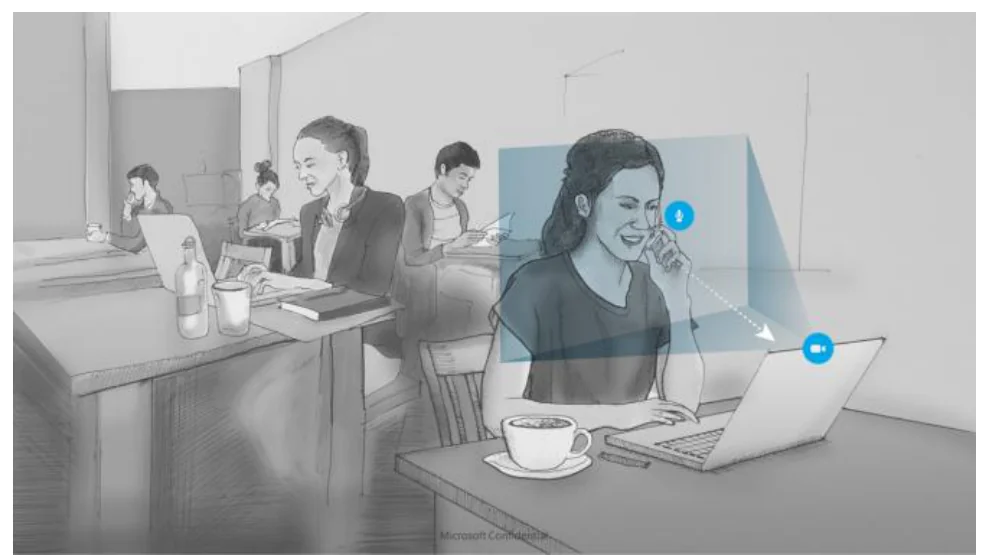
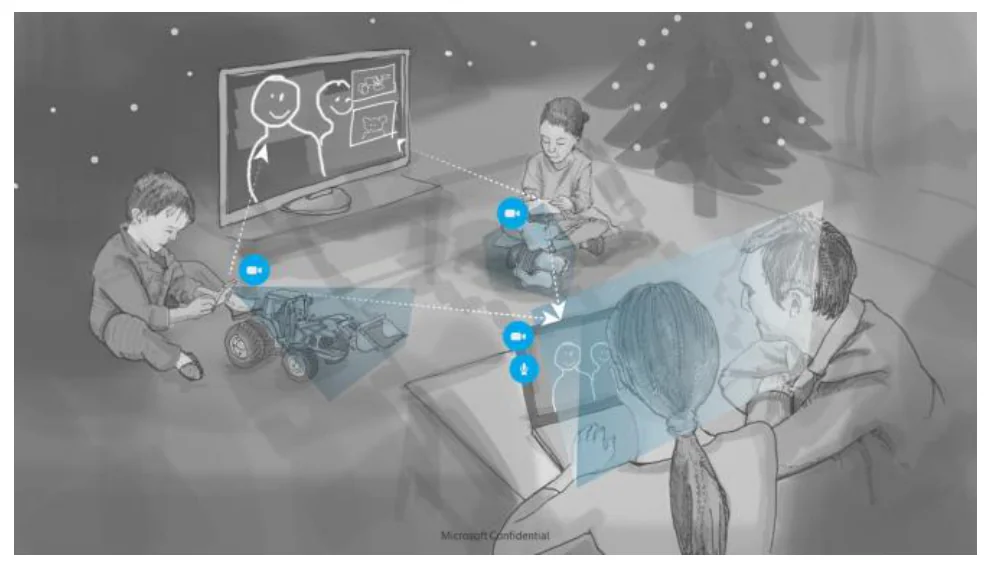
How to cite
Sean Rintel, Kenton O'Hara, Behnaz Rostami Yeganeh, and Roman Rädle. 2015. Ad hoc adaptability in video-calling. ITS'2015 - Workshop on Interacting with Multi-Device Ecologies in the Wild.
This brief was prepared with AI assistance and published by Sean Rintel. It is not the authors' published text. Page numbers refer to this PDF.